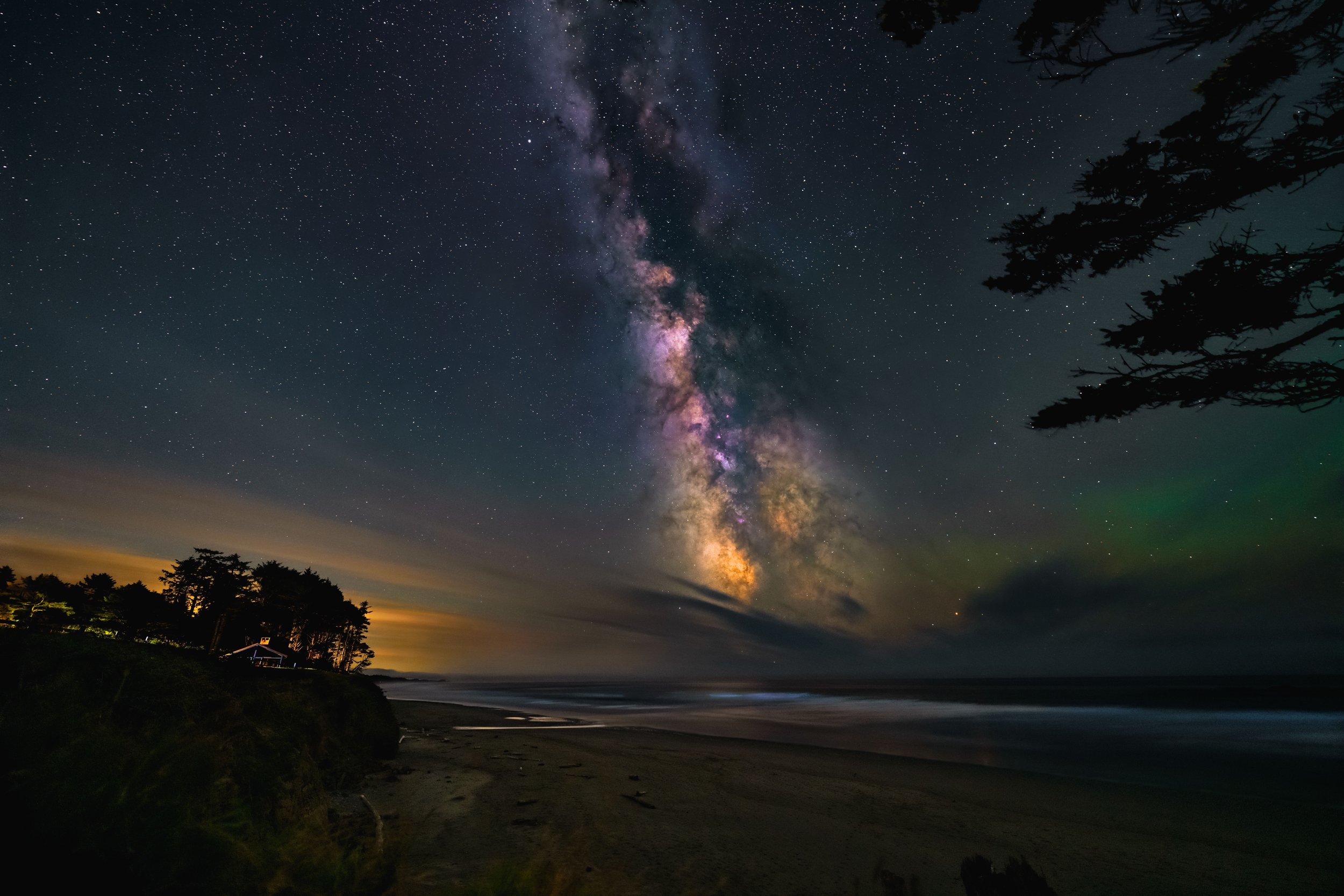
Astrophotography Adventures — Field Nights, Virtual Labs
Small-group, on-location night sky shoots guided by Steven. We meet at golden hour, shoot through galactic rise, then master the edit together in a live virtual classroom. Field-first. Portfolio results.
Experience the night sky the way it was meant to be photographed—under dark horizons, with safe fieldcraft, and repeatable edits. Each Adventure pairs small-group, on-site coaching in some of the world’s darkest parks with a complete start-to-finish workflow: virtual pre-planning, field-tested capture sequences, and focused post-processing sessions. You’ll know exactly where to stand, when to shoot, and how to build clean, stackable files—then take them home and finish with confidence. Arrive prepared; leave with portfolio-ready images you’ll be proud to print.
Overview
Meet at golden hour, shoot through galactic rise under dark skies, then finish your images in a guided virtual edit lab. These field-first workshops give you a reliable capture workflow (blue-hour foregrounds, clean sky stacks, optional tracked sky) and the post-processing confidence to produce natural, print-worthy Milky Way photographs—without daytime lecture bloat.
Who It’s For
Photographers comfortable with manual exposure who want repeatable night results. Night-photo beginners are welcome; if you can set shutter, aperture, and ISO, you’ll fit right in.
What You’ll Learn
Milky Way Planning: Core timing, azimuth/elevation, moon phases, Bortle class, weather windows
Night Fieldcraft: Safe navigation, light discipline, efficient scouting after dark
Exposure Theory: NPF-rule shutter limits, ISO vs. aperture trade-offs, preserving star color
Capture Techniques: Static burst stacking for low noise, optional tracked sky, blue-hour foreground plates
Post Workflow: Clean baseline edit, stacking/blending for natural results, color harmony, print-safe sharpening
Lens & Focal-Length Strategy: How ultra-wide vs. wide angles change shutter limits, star size, perspective, and corner sharpness
What’s Included
Evening/night field instruction (1–3 nights)
Virtual planning session before we meet (live + recorded)
Virtual edit labs after the field nights (recorded)
PDF field advice card, packing list, and meet-point details
Radio protocols and on-site coaching for light discipline and safety
Not Included
Travel, lodging, meals, park entry fees/passes, personal or gear insurance, and any optional rentals (tracker, lens heater, radio).
Skill & Fitness
Manual-exposure comfort recommended; tripod required. Most locations use paved lots or short, mostly flat approaches. Some nights may include sand, uneven footing, cold/heat, or wind; distances and terrain vary by site and will be clearly stated on each product card.
Student Gear Checklist
Wide, fast lens (11–24mm f/1.4–2.8) • Sturdy tripod • Headlamp with red mode • 2–3 batteries • 128–256GB card • Weather-appropriate layers • Water/snacks
Optional: Star tracker (e.g., MSM) • Lens heater • Intervalometer/remote
Software Requirements (Editing)
Mac or PC computer • Adobe Lightroom Classic • Adobe Photoshop • Star stacking (macOS: Starry Landscape Stacker, Windows: Sequator) • RC-Astro StarXTerminator (Photoshop/Lightroom plugin)
Example Schedule Snapshot
Meet: ~30 min before sunset at a paved, GPS-shared lot
Golden Hour: Foreground scouting and composition pins
Blue Hour: Foreground plates (bracket if needed)
Night: Static stacks; optional tracked demo; pano when conditions allow
Virtual Lab: 1–3 days later (recording provided)
Weather, Conditions, and Safety
We chase clear skies but honor wild places. If clouds, wind, cold/heat, or closures threaten results or safety, we pivot: alternate locations, different timing, or a switch from dunes to firmer ground. We make go/no-go calls using conservative thresholds (heat index, wind speeds, lightning distance, road/park advisories). When a session can proceed safely but conditions are variable, we adapt the curriculum to maximize learning and image quality. If a field night is fully weathered out or access is closed, we reschedule or credit/refund at our discretion. We follow all park rules and required authorizations for photography workshops. Leave No Trace, and respect for wildlife always come first.
Cancellations
Your seat is held with a non-refundable retainer; the remaining balance is due 45 days before the first field night. If you need to cancel, you may transfer your seat to another person at any time. If we can fill your spot from the waitlist, we’ll issue a refund or credit (minus a small admin fee); otherwise, tuition is non-refundable once inside 45 days. If you must withdraw due to illness or emergency, reach out—where possible, we’ll work with you on a credit toward a future workshop.


✺ Frequently asked questions ✺
-
No. If you can use manual mode (set shutter, aperture, ISO) you’re good. We cover planning, exposure, stacking, and blending step-by-step in the field and in the virtual labs.
-
Any modern mirrorless/DSLR that shoots RAW, a sturdy tripod, and a wide/fast lens (roughly 14–24mm at f/1.4–2.8). A mid-zoom (24–70mm) is great for blue hour; a 70–200mm is optional for layered valley shots.
-
Short and mostly flat: plan on 0.5–1.5 miles total per evening from paved pullouts/boardwalks with occasional steps/ramps. No off-boardwalk travel in thermal areas.
-
We adapt—switching to blue-hour river reflections, long-exposure cloud studies, and tele abstracts while watching for sky breaks. If conditions or closures make the session unsafe or unproductive, we reschedule or credit/refund per policy.
-
Minimal and respectful. We favor blue-hour foreground plates; at night we keep lights very low and brief, never toward wildlife or other visitors. Light discipline preserves the experience and your star color.
-
We follow park rules: keep 25 yd from bison/elk and 100 yd from bears/wolves, yield and relocate if animals approach, and keep noise/light low. Most locations are roadside/boardwalk-adjacent for quick, safe exits.
What You’ll Learn
-
✺
Milky Way Planning: Core timing, azimuth/elevation, moon phase, Bortle class, weather windows
-
✺
Night Fieldcraft: Safe navigation, light discipline, compositions that work after dark
-
✺
Exposure Theory: NPF-rule shutter times, ISO vs. aperture trade-offs, star color retention
-
✺
Capture Techniques: Static stacks for low noise, optional tracked sky, blue-hour foreground plates
-
✺
Lens & Focal-Length Strategy: How ultra-wide vs. wide angles change shutter limits, star size, and perspective
-
✺
Post Workflow: Clean baseline edit, stacking, natural blue-hour blends, color harmony, print-safe sharpening